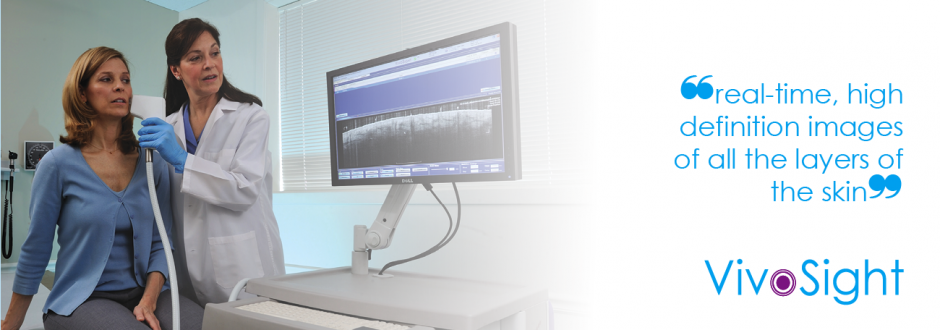
Michelson Diagnostics develops breakthrough products that enable non-invasive real time, high resolution imaging of tissue structures beneath the skin surface.

The unique Multi-Beam Optical Coherence Tomography (OCT) technology is able to produce images with a resolution of 7.5 microns to a depth of greater than 1 mm.

This unparalleled combination of speed, resolution and image depth enables clinicians to visualise structures previously unseen with existing lower resolution imaging systems such as ultrasound or MRI, and all without the use of any ionising radiation.

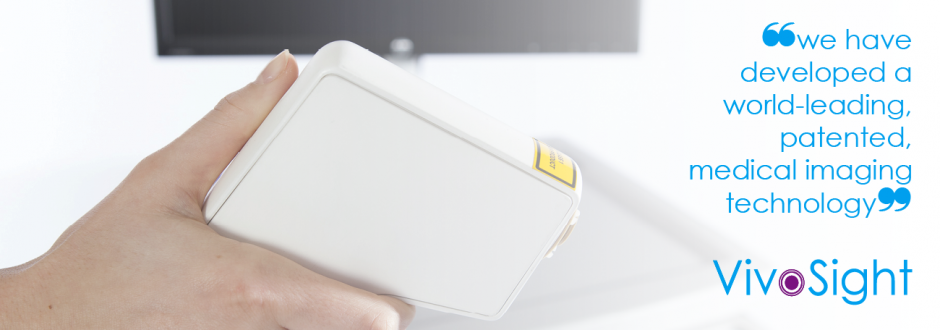
Michelson Diagnostics’ lead product, the CE approved and FDA cleared VivoSight OCT scanner, is being used by an increasing number of clinicians, research institutes and companies in Europe and the USA.

The company is working with research collaborators in the fields of:

  • Skin cancer
  • Psoriasis
  • Photodynamic Therapy (PDT)
  • Epidermal thickness measurement
An OCT scan showing a Basal Cell Carcinoma cancer nest on the right and tissue regrowth on the left following a diagnostic biopsy. Image size 2 mm x 1.2 mm.
Image courtesy Daniel Siegel, MD, and Deborah Zell, MD, of Long Island Skin Cancer, Smithtown, NY, USA.
Image taken with a VivoSight OCT scanner, April 2010.

Download a presentation of skin images taken with the VivoSight OCT Scanner

The company’s mission is to work with leading dermatologists to establish OCT imaging:

  • As a routine non-invasive technique that enables early investigation and detection of skin abnormalities leading to earlier diagnosis and treatment.
  • As a method of guiding therapy and monitoring therapy efficacy, reducing the need for unnecessary invasive procedures.

“For each clinically visible margin, the pattern of the damage and the degree of tumour extension were clearly identified. Some areas exhibited almost perfect co-registration between the visible margin and OCT scan in term of evident histological damage…. With the advent of new optical technologies such as OCT, we can now monitor lesions more precisely and accurately so obviating many of the previous shortcomings of PDT … Additionally, OCT may help clinicians to monitor the outcome after the treatment, improving their understanding of the technique and offering an indication of the possible result to the patients”

Zaid Hamdoon, Waseem Jerjes, Tahwinder Upile and Colin Hopper "Optical coherence tomography-guided photodynamic therapy for skin cancer: Case study" Photodiagnosis and Photodynamic Therapy Volume 8, Issue 1, March 2011, Pages 49-52
 
Banner
BSI MD 545454